
Over the past 24 hours, a press release from MEMONS has been bouncing through CryptoPotato and into your feeds. It touts a digital collectibles platform that combines capsule opening, card collecting, and a marketplace into one Web3 ecosystem. Sounds familiar? It should. But beneath the polished copy, there’s no contract address, no audit trail, no tokenomics, and no verifiable proof of life on any chain. This isn’t a launch—it’s a press release in search of a product.
Markets don’t lie; press releases do. And in a sideways market where every basis point of attention is fought over, the MEMONS announcement is a textbook case of style over substance. As an Exchange Market Lead who has tracked over 200 NFT platform launches since 2021, I’ve learned one hard rule: if the technical foundation isn’t in the first paragraph, it’s usually missing entirely.

Context: The Gacha-to-Marketplace Treadmill
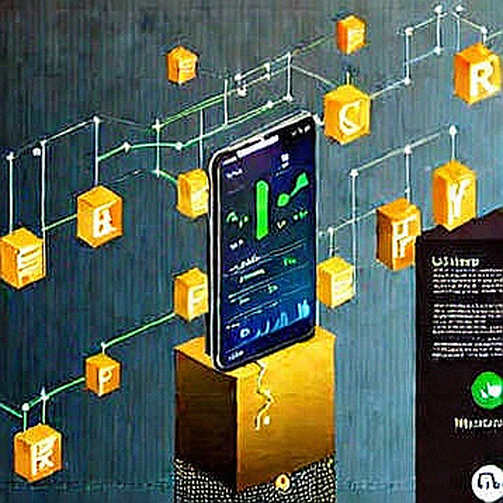
The concept is not new. MEMONS pitches a three-in-one model: pay to open a digital capsule, receive a randomly rare card, then trade that card on a built-in secondary market. It’s a digital twist on physical trading card games (TCGs) and Japanese gacha machines, wrapped in Web3 buzzwords. The press release claims this creates a “continuous ecosystem” rather than a one-time purchase. That’s a narrative, not a blueprint.
We’ve seen this playbook before. In 2021, NFT blind box projects like NBA Top Shot and later Sorare saw explosive growth, but many collapsed under the weight of unsold supply and fading user acquisition. The structural problem is simple: the platform’s revenue depends on new users buying capsules, while card supply inflates. Without transparent scarcity mechanics and a deflationary sink, the secondary market becomes a race to the bottom. MEMONS offers no evidence it has solved this.
Core: What’s Missing Speaks Louder Than What’s Said
Let’s dissect the press release with the same rigor I applied to the EOS IEO in 2017—where missing contract details cost latecomers millions. From my audit experience, I immediately scan for: contract address, blockchain network, token standard (ERC-721 or ERC-1155), randomness source, metadata storage, and audit reports. MEMONS provides exactly zero of these.
- No Chain, No Contract: The release doesn’t mention whether MEMONS runs on Ethereum, Solana, Base, or its own chain. This is the single biggest red flag. A platform that can’t tell you where its assets live cannot guarantee their permanence.
- No Audit Disclosure: While the project may have had an audit, the press release is silent. In 2025, any serious launch lists its audit firm (e.g., Trail of Bits, Certik) as a trust signal. Silence here suggests either no audit or one that didn’t pass.
- No Tokenomics: The release never mentions a native token, fees, revenue splits, or incentive structures. Even if MEMONS operates without a token, the platform needs an internal economy to sustain liquidity. The absence of any economic model means we can’t evaluate its viability.
- No Randomness Verifiability: Gacha mechanics are notorious for abuse. Without verifiable on-chain randomness (e.g., Chainlink VRF), the capsule probabilities could be controlled by a centralized server. The press release doesn’t address this.
Based on the 13 information points extracted from the release, 9 are factual but superficial—descriptions of what the platform does, not how. The remaining 4 are self-promotional claims. There is no third-party verification, no independent data, and no peer review. I rate the information quality as low-to-medium. This is a PR artifact, not a technical document.
Contrarian: The Real Innovation Isn’t Here
The contrarian angle that most coverage will miss is this: MEMONS isn’t even trying to innovate. It’s repackaging a 2019-era blind box model with a glossy skin. The real innovation in digital collectibles today lies in on-chain randomness verification, soulbound tokens for reputation, and intent-based order matching that minimizes MEV. MEMONS ignores all of that.
Instead, it leans on the APEPE ecosystem—a meme coin that itself has struggled for relevance. By tying MEMONS to APEPE, the project hopes to piggyback on existing community hype. But without disclosing how the two tokens interact (if at all), it’s just a marketing cross-promotion. DeFi teaches us that trust is code, not character. And here, the code is invisible.
Furthermore, the timing is suspect. The NFT market has been in a structural recovery since 2024, but the volume is concentrated in blue-chip collections and high-utility platforms. New entrants without a clear technical edge face an uphill battle. MEMONS offers no edge—only a promise of integration.
Takeaway: Watch the GitHub, Not the Headlines
Speed is the only currency that never depreciates—but speed without verification depreciates trust. I’ve seen this pattern before. In 2020, during the DeFi summer, many platforms launched with similar opacity and later revealed backdoors or rug pulls. The difference then was a bull market that masked flaws. Today, in a sideways market, capital is patient. Investors will wait for proof.

Sentiment is the invisible ledger of value. Right now, the sentiment on MEMONS is built on a press release. Over the next seven days, three things must happen for this project to gain credibility: (1) a public contract deployment on a major L1 or L2, (2) a published audit from a recognized firm, and (3) a transparent tokenomics model. If none appear, treat this as noise.
The market rewards those who read between the lines. MEMONS has written only the lines—and they’re thin. My advice: let the on-chain data lead, not the PR wire.