
Truth is not given, it is verified. Yet, when Quest Global—a 20,000-person engineering services firm with roots in India and Singapore—reportedly hired banks for a $1 billion Mumbai IPO, the market responded with a familiar chorus: "Another traditional company goes public." But for those of us who dissect code and trust, this event is not just a capital markets milestone. It is a signal that the engineering services industry, one of the last bastions of highly centralized, relationship-driven B2B work, is about to face a structural tension that blockchain was built to resolve.
The core fact is thin: Quest Global, a player in aerospace, automotive, energy, and medical device engineering R&D (ER&D), has engaged underwriters for an IPO that could raise up to $10 billion. The source—Crypto Briefing, a crypto-native outlet—is not a traditional financial media, but the signal is consistent with a broader trend: Indian ER&D firms are capitalizing on global supply chain diversification. Yet, the deeper story is not about IPOs. It is about the gap between how we organize trust in engineering services versus how we could organize it using modular, verifiable systems.
Context: The Architecture of Centralized Engineering
Quest Global’s business model is typical of ER&D: project-based contracts, time-and-materials billing, and a heavy reliance on client certifications (AS9100 for aerospace, ISO 13485 for medical devices). Its moat is built on relationships, not code. The banks involved in the IPO—whose names remain undisclosed—will underwrite the offering based on financial audits, due diligence, and a narrative of growth. The entire process is opaque, sequential, and trust-dependent. In blockchain terms, it is a monolithic chain: one central authority (the underwriter) validates the entire state of the company, and investors must trust that validation without the ability to independently verify the underlying data.
This is where the philosophical tension emerges. Modularity is the architecture of freedom. In a modular blockchain, data availability, execution, and consensus are separated. But in the IPO world, everything is bundled into a single process: the bank underwrites, the regulator approves, the exchange lists. The investor cannot query the ledger of contracts, the real-time utilization of engineers, or the on-chain record of project milestones. They must trust a PDF. In the bear market, only code remains—but here, the code is not the company’s source code; it is the legal code of the prospectus, which is rarely auditable by the public.

Core: Decentralizing the Engineering Services Layer
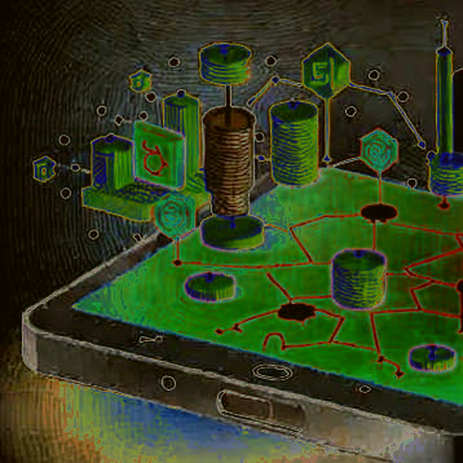
Based on my audit experience deconstructing Uniswap V2’s AMM logic, I see a parallel: the engineering services industry operates on a similar model of liquidity pools—but with people instead of tokens. The liquidity is the talent pool; the price is the hourly rate; the swaps are project assignments. The problem is that the entire system relies on centralized coordinators (the firm, the client, the bank) to match supply and demand. What if we could build a modular protocol for engineering services? A decentralized autonomous organization (DAO) that uses zero-knowledge proofs to verify that a team in India has completed a certified aerospace component, and then automatically settles payments in a stablecoin? The technology exists: ZK-Rollups can verify batch computations, and data availability sampling can ensure that every project milestone is recorded without revealing proprietary designs.
Quest Global’s IPO is a reminder that the physical world still requires trust in institutions. But the contrarian angle is that the very act of going public exposes the inefficiencies of centralized trust. The 10% underwriting fees, the months of regulatory approval, the risk of insider trading—all of these are costs that blockchain could compress. Skepticism is the first step to sovereignty. We should not accept that a $1 billion engineering services company must raise capital through a 20th-century mechanism. The modular blockchain epiphany of 2024 taught me that specialization is the path to resilience. The ER&D industry could specialize into layers: a talent layer (verified credentials), a project layer (smart contracts for milestones), a payment layer (stablecoins with automated escrow), and a governance layer (DAOs for client-firm alignment).
Contrarian: The Pragmatism Test
Yet, I must pause. The crypto community has been guilty of over-engineering solutions to problems that don’t exist. RWA on-chain has been a three-year storytelling exercise, but no one wants to admit: traditional institutions don’t need your public chain. Quest Global’s clients—GE Aerospace, Airbus, Boeing—are not going to migrate their supply chain to a Solana-based marketplace tomorrow. The regulatory barriers are immense. The MiCA framework in Europe, for instance, imposes stablecoin reserve requirements that would make a decentralized engineering DAO impractical. The cost of compliance for a DAO operating across 18 countries would be prohibitive, as I argued in my 2025 piece on the surveillance state of on-chain data.
But here is the nuance: the IPO itself is a form of regulatory compliance. Quest Global will undergo SEBI scrutiny, which is a centralized trust ritual. The blockchain alternative is not a replacement for this ritual in the short term; it is a parallel infrastructure that can compete on efficiency for smaller, more agile projects. The real opportunity is for a protocol that allows engineering teams to self-organize for niche, high-value tasks—like certifying a new aircraft component for a startup—without needing a 20,000-person firm. This is the builder-centric application: a modular protocol that lets engineers form temporary, verifiable teams.
Takeaway: The Vision Forward
The Quest Global IPO is not a threat to blockchain; it is a mirror. It shows us that the engineering services industry is still operating on a trust model that predates the internet. The modular architecture of freedom is not about replacing the firm overnight; it is about building the layers that allow anyone to verify, contribute, and earn without permission. The question is not whether Quest Global will IPO successfully—it likely will. The question is whether the next generation of engineering services will be built on monolithic trust or on verifiable, modular code. In the bear market, only code remains. In the bull market, only the builders who understand this distinction will survive.
Builder’s Challenge: Write a Solidity smart contract that implements a milestone-based escrow for an engineering project. Use a ZK-SNARK to verify that the milestone has been completed without revealing the proprietary design. Deploy it on a testnet. Then ask yourself: would Quest Global’s clients use this? If not, what missing layers are needed?